
Hit enter to search or ESC to close
Mar 26, 2026


When undertaking construction, metalwork, or DIY projects, selecting the right fasteners is crucial for success and safety. 2.5 inch self-drilling screws are a popular choice for various applications, known for their efficiency and ease of use. This article delves into the features, benefits, applications, and considerations when choosing these screws, offering a complete overview for professionals and hobbyists alike. Understanding the intricacies of these screws can save you time, effort, and ensure a strong, lasting connection.
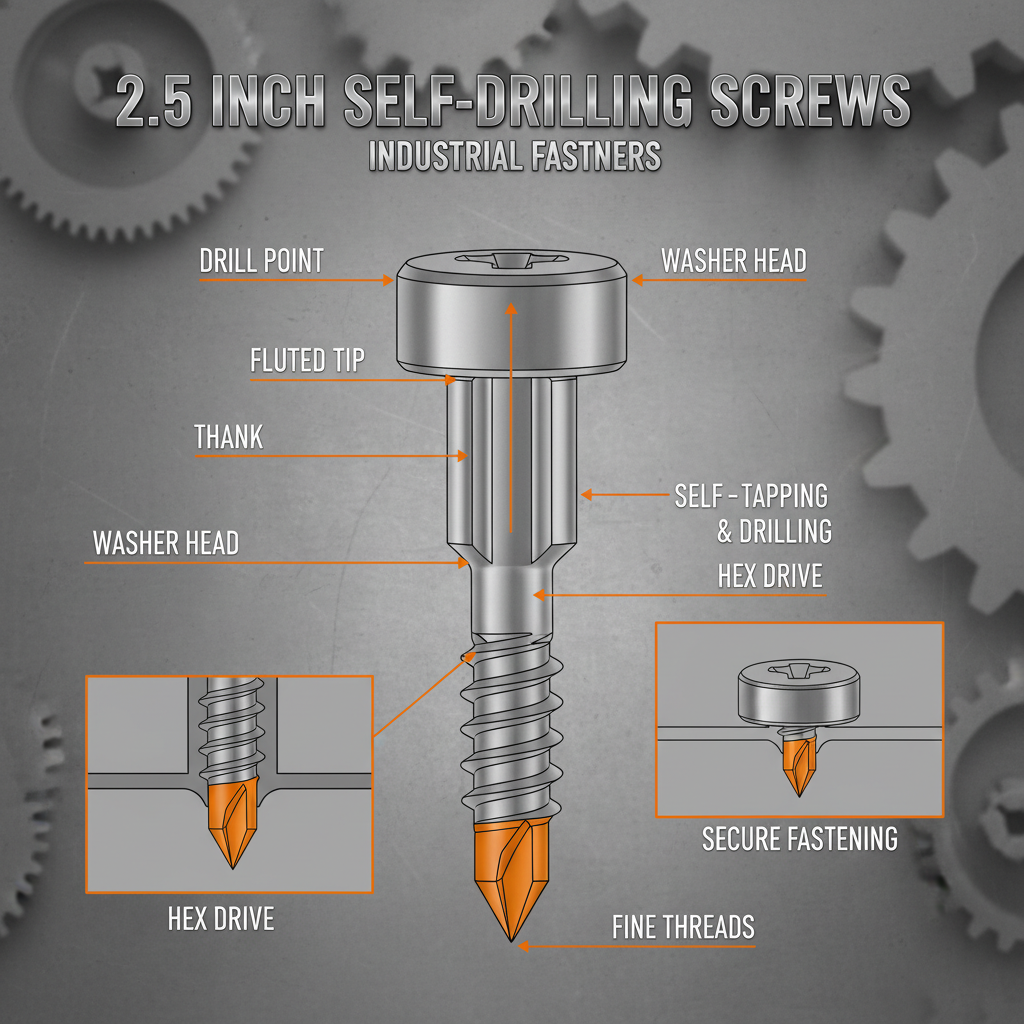
2.5 inch self-drilling screws, also known as self-tapping screws, are designed to drill their own hole and tap the threads in a single operation. This eliminates the need for pre-drilling, saving time and labor. They feature a drill-bit-like point that penetrates the material, creating a pilot hole and simultaneously cutting threads as the screw is driven in. This makes them ideal for joining metal sheets, wood to metal, and other materials where pre-drilling isn’t feasible or desired. They are available in a variety of materials, coatings, and head styles to suit diverse applications. Choosing the right type of self-drilling screw is paramount for a secure and lasting hold.
Key Highlights: Eliminate the need for pre-drilling, saving time and labor. Available in various materials and coatings for specific applications. Provide a secure and lasting connection in metal, wood, and other materials.
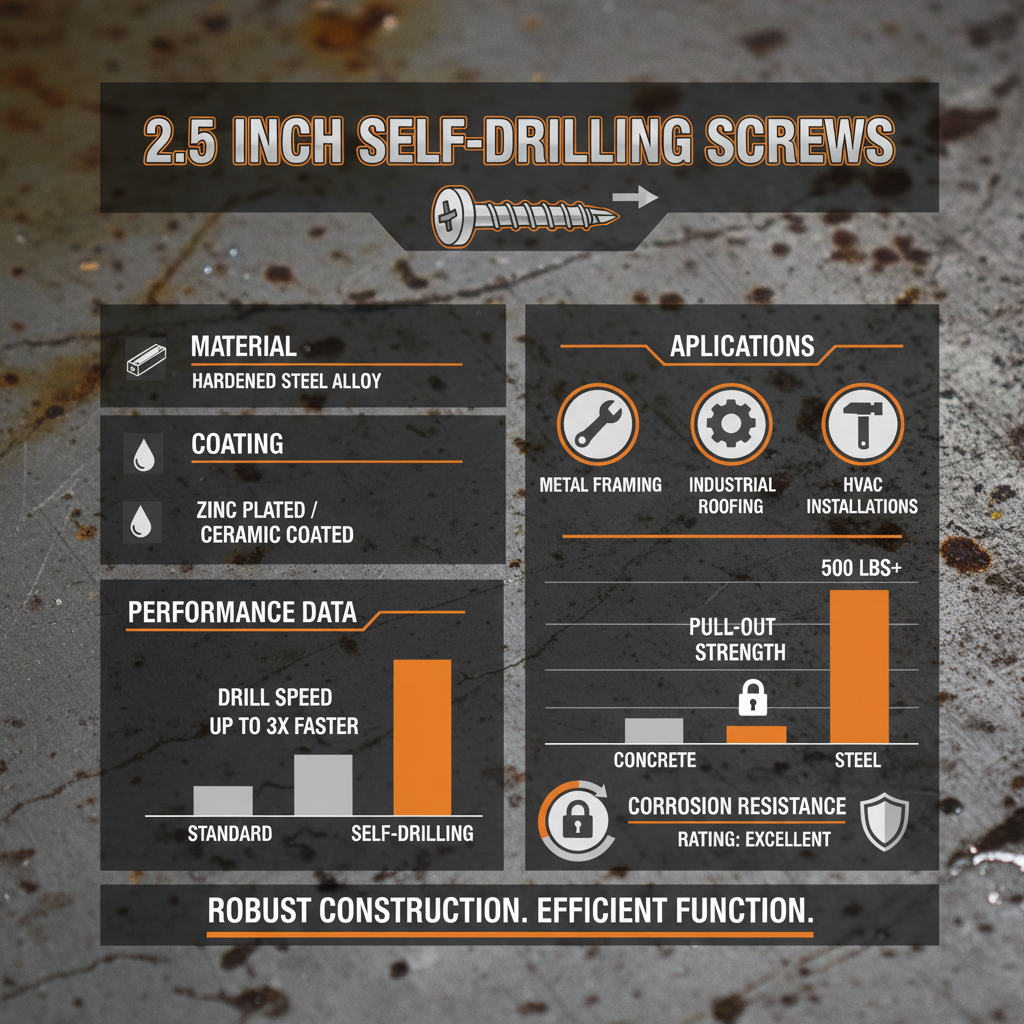
These screws find widespread use across numerous industries and projects. In construction, they're vital for attaching metal roofing sheets to steel frames. In HVAC systems, they secure ductwork and support structures. Automotive repair utilizes them for body panel work and internal components. DIY enthusiasts employ them in projects ranging from building sheds to assembling furniture. Here’s a breakdown of some frequent uses:
Popular Application Areas:
• Metal Roofing & Siding
• HVAC Ductwork
• Automotive Body Repair
• Sheet Metal Fabrication
• Wood to Metal Connections
Self-drilling screws come in several variations to meet specific needs. Point styles include Type 17 (drill point), which is common for thinner materials, and Type 25 (nib point), better for thicker materials. Head styles vary from flat head for flush finishes to pan head for general use. Material choices heavily influence performance and durability. Common materials include:
Selecting the correct screw involves considering the materials being joined, the environment, and the required strength. For outdoor projects or areas exposed to moisture, stainless steel screws are recommended. For indoor applications, carbon steel with a zinc coating often suffices. Ensure the screw length is appropriate for the material thickness – 2.5 inches is suitable for joining materials up to approximately 1/8 inch thick. Always use the correct driver bit to prevent stripping the screw head. Lianshi WJNail offers a wide range of self-drilling screws to meet various project requirements.
Proper installation is key to achieving a secure and lasting connection. Use a drill with adjustable clutch settings to avoid overdriving the screw. Apply consistent, even pressure during driving. For thicker materials, start slowly to allow the screw to establish a firm grip. Avoid using excessive force, which can strip the screw head or damage the material. Regularly inspect your screws for signs of corrosion or damage and replace them as needed.
Understanding the nuances of 2.5 inch self-drilling screws empowers you to select the right type, install them correctly, and ensure a durable, reliable connection for your projects. By considering material compatibility, environmental factors, and proper installation techniques, you can maximize the performance and longevity of these versatile fasteners.
These screws are primarily designed for joining sheet metal, but they can also effectively connect wood to metal. The type of material dictates the screw material you choose; stainless steel for corrosive environments, and zinc-plated or carbon steel for indoor applications. Always consider the thickness of the materials – 2.5 inches is best suited for materials around 1/8 inch thick. Using the wrong screw for a material can result in a weak connection or damage to the materials.
Type 17 screws have a sharp, drill-point designed for thinner materials (typically up to 1/8 inch). Type 25 screws feature a nib point, which is better suited for thicker materials as it requires less force to penetrate. The nib creates a pilot hole, then the threads cut in as the screw is driven. Choosing the correct type ensures efficient drilling and a secure connection. Using the wrong type can lead to stripping the screw or damaging the material.
Use the correct driver bit size and type for the screw head. Ensure the drill clutch is properly adjusted to prevent overdriving. Apply consistent, even pressure while driving the screw. Avoid using excessive force. If you encounter resistance, back the screw out slightly and try again. A worn or damaged driver bit can also contribute to stripping, so replace it as needed. Using high-quality screws from a reliable supplier like Lianshi WJNail can also help prevent this issue.
JOIN OUR NEWSLETTER


If you are interested in our products, you can choose to leave your information here, and we will be in touch with you shortly.