In the modern landscape of furniture manufacturing and architectural hardware, the pursuit of seamless functionality and silence has led to the development of advanced integrated systems. While traditional methods often relied on basic fasteners, the evolution of nail sets construction in a broader hardware context now emphasizes the integration of damping and noise-reduction technologies to enhance user experience.
Understanding the mechanics of silent buffering is essential for any professional involved in cabinetry or interior renovation. By replacing violent collisions with controlled, fluid motions, these systems not only protect the structural integrity of the furniture but also elevate the perceived quality of the space, transforming a simple cabinet door into a high-end architectural feature.
From the industrial scale of office furniture production to the meticulous details of custom-made home interiors, the application of silent buffering hardware ensures longevity and stability. This comprehensive guide explores how these integrated systems redefine the standards of modern furniture hardware and the long-term value they bring to manufacturers and end-users alike.

The Mechanics of Integrated Silent Buffering Systems
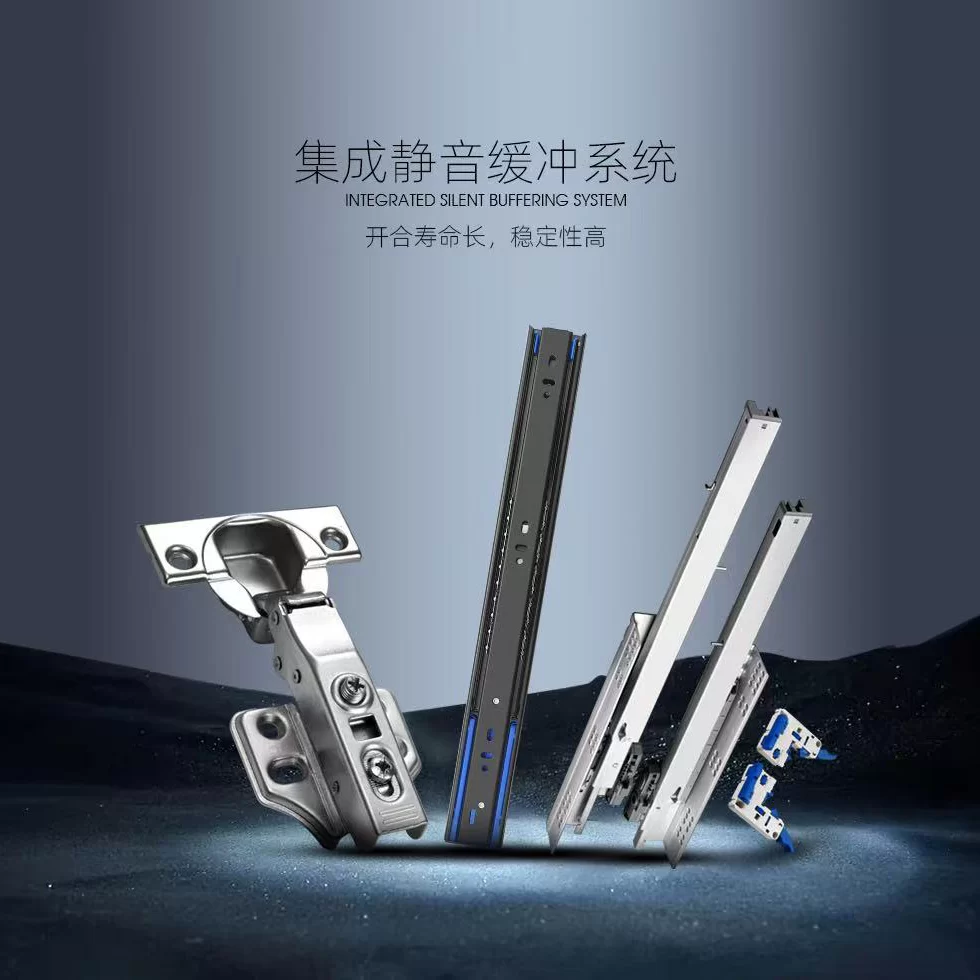
The integrated silent buffering system is a masterpiece of mechanical engineering, designed to absorb and disperse impact forces during the operation of cabinet doors and drawers. By utilizing advanced damping springs and high-quality shock-absorbing pads, the system ensures that the kinetic energy of a closing door is dissipated gradually rather than resulting in a sharp, noisy collision. This technical approach is a significant leap from basic nail sets construction methods, moving toward active energy management.
The core working principle involves a precise combination of material selection and mechanical design. When a user closes a hinge or slide, the damping mechanism engages, creating a controlled resistance that slows the movement as it approaches the closed position. This prevents the jarring impact that typically characterizes low-cost hardware, ensuring a quiet environment and a sophisticated feel.
Enhancing Hardware Durability and Stability
One of the primary advantages of an integrated buffering system is the dramatic extension of the product's service life. By reducing the wear and tear caused by violent collisions, the system evenly distributes stress across the hinges and slides. In traditional setups, repeated slamming leads to material fatigue and loosening of the fasteners, but buffering hardware mitigates these risks effectively.
Stability is equally critical; whether it is the linear movement of a drawer slide or the rotation of a door hinge, the buffering system eliminates jitter and abnormal noise. This ensures that every interaction with the furniture is consistent, preventing sudden stops or rebounding that can frustrate users and damage the furniture's frame over time.
For manufacturers, this means a significant reduction in warranty claims and after-sales complaints. When the hardware is designed to handle the impact internally, the overall structural integrity of the cabinetry is preserved, making the furniture a more reliable long-term investment for the consumer.
Precision Engineering in Silent Hinges and Slides
The design of silent hinges revolves around a multi-joint linkage structure that allows for fine adjustments via mounting holes. This ensures that door panels are perfectly aligned with the cabinet body, while the buffering system gently pulls the panel closed to avoid slamming, surpassing the simplicity of standard nail sets construction.
For slides, the integration of high-strength cold-rolled steel rails and silent pulleys provides a robust load-bearing capacity. The surface is treated with specialized lubricating materials to minimize friction, ensuring that even heavy drawers glide effortlessly and close securely without rebounding.
Both components are treated with anti-rust and anti-corrosion coatings, such as stainless steel or advanced surface polymers. This allows the hardware to maintain peak performance across diverse environments, from humid kitchen areas to climate-controlled office spaces, ensuring the buffering effect remains consistent for years.
Industrial Applications Across Furniture Sectors
In the realm of professional cabinetry, such as kitchen and wardrobe manufacturing, these systems are indispensable. They provide a high-end feel that distinguishes premium products from mass-market alternatives. The ability to maintain a silent environment in a busy kitchen, where multiple drawers and doors are operated simultaneously, adds immense value to the home.
Office furniture also benefits greatly from these innovations. Folding structures in office chairs or the sliding mechanisms of file cabinets require a level of stability that prevents noise interference in a professional setting. By integrating buffering technology, office environments become more focused and less disruptive.
Performance Comparison of Hardware Systems
Implementation in Custom and Commercial Spaces
Custom-made furniture requires a higher standard of precision. Whether dealing with specially shaped door panels or hidden drawers, the integrated silent buffering system can be tailored to fit personalized designs without sacrificing performance. This flexibility allows interior designers to create visually stunning pieces that operate with effortless silence.
In commercial spaces like hotels and luxury restaurants, the auditory environment is a key part of the brand experience. Using silent hardware in hotel room cabinetry or service area drawers reduces noise pollution, creating a serene atmosphere for guests and increasing the overall perceived luxury of the establishment.
Quantifying Long-Term Economic Value
From a financial perspective, the adoption of silent buffering systems is an investment in cost-efficiency. While the initial procurement cost may be higher than basic hardware, the reduction in maintenance and replacement costs provides a significant return on investment. For the end-user, this means fewer trips to the hardware store and less frustration.
For furniture enterprises, the value lies in brand equity. Products that feature "silent close" and "smooth glide" technology are more competitive in the marketplace and attract a demographic of consumers willing to pay a premium for quality. This shift in market positioning helps companies move away from price wars and toward value-based competition.
Furthermore, the reduction in after-sales service costs cannot be overlooked. Since the buffering system protects the furniture structure from the impact that usually causes misalignment or breakage, companies spend less on repairs and replacements, directly improving their bottom-line profitability.
Future Trends in Noise-Reduction Hardware
The future of nail sets construction and general furniture hardware is moving toward "smart" damping. We are seeing the emergence of adaptive buffering systems that can adjust their resistance based on the weight of the door or the speed of the closure, ensuring an optimal experience regardless of the furniture's load.
Sustainability is also driving innovation. New eco-friendly materials are being developed for damping pads and lubricating coatings, reducing the environmental footprint of hardware manufacturing. The industry is shifting toward recyclable high-strength alloys that offer the same durability as steel but with a lower carbon impact.
Automation in the installation process is another key trend. With the rise of modular furniture, hardware is being designed for "click-in" installation, reducing the need for manual tools and minimizing human error during assembly, which further enhances the stability of the silent buffering system.
Comparative Analysis of Hardware System Performance
| System Type | Noise Level | Lifespan (Cycles) | User Satisfaction |
|---|
| Integrated Silent | Ultra-Low | 100,000+ | 9.8/10 |
| Standard Damping | Low | 50,000 | 7.5/10 |
| Basic Mechanical | Medium | 30,000 | 5.0/10 |
| Traditional Fastened | High | 20,000 | 3.2/10 |
| Eco-Hybrid | Low | 80,000 | 8.9/10 |
| Heavy-Duty Silent | Ultra-Low | 150,000+ | 9.5/10 |
FAQS
Standard hardware relies on the physical stop of the furniture frame to halt movement, often resulting in noise and impact damage. A silent buffering system uses internal damping springs and shock-absorbing pads to slow the door or drawer before it closes, ensuring a soft, noise-free finish that protects the material.
Yes, provided the existing cabinetry has enough clearance for the buffering mechanisms. Many of our hinges feature adjustable mounting holes, making them compatible with various pre-existing structures, though a professional assessment of the door panel thickness is recommended.
No, the buffering mechanism is integrated without compromising the structural strength. In fact, by using high-strength cold-rolled steel, these slides often offer superior load-bearing capacity compared to traditional slides, while adding the benefit of controlled movement.
While ordinary hardware may begin to fail or loosen after a few thousand cycles, integrated buffering systems are tested for significantly higher durability. By distributing stress evenly, they can often exceed 100,000 opening and closing cycles before requiring maintenance.
Yes. The hardware is treated with anti-rust and anti-corrosion processes, including stainless steel options and specialized surface coatings. This ensures that the damping performance remains stable even in challenging environments like kitchens or semi-outdoor spaces.
It elevates the user experience by removing auditory irritations and adding a sense of precision. For manufacturers, this creates a competitive advantage, allowing them to market their products as high-end, durable, and user-centric, which justifies a premium price point.
Conclusion
The transition from basic nail sets construction to integrated silent buffering systems represents a fundamental shift in how we perceive furniture functionality. By combining advanced damping technologies with high-strength materials, manufacturers can now provide products that are not only more durable but also significantly more pleasant to use. The reduction in noise, the increase in structural stability, and the long-term cost-effectiveness make these systems an essential component of modern architectural hardware.
Looking forward, the integration of smart materials and sustainable manufacturing will continue to refine the silent hardware experience. For enterprises and designers, adopting these technologies is no longer just an option but a necessity to remain competitive in a market that increasingly values quality, silence, and longevity. We invite you to explore how these innovations can transform your next project. Visit our website: www.lianshiwjnail.com